
Guides
Part of Scrolling habits and attention: a practical guide
How to reset a scrolling habit without abandoning your phone
Reset a scrolling habit by defining a problem, logging cues, changing notifications and access, adding stopping points, testing replacements, and reviewing results.
What to take away
- Define the unwanted consequence before choosing a restriction.
- Observe cues for several days so the plan targets the real entry points.
- Reduce interruption at the notification level, not only through willpower after the app opens.
- Add a stopping rule and a replacement for the moment the scroll usually fills.
- Review sleep, task completion, mood, and chosen use, not minutes alone.
A reset is a short experiment that makes phone use more deliberate. It does not require a total digital fast, a new identity, or a claim that every app is harmful.
Pick one practical goal: finish a work block without feed checks, protect the last hour before sleep, stop unplanned shopping scrolls, or reduce upsetting news repetition. The narrower the goal, the clearer the test. The scrolling-and-attention guide explains the cue-action-reward loop this experiment interrupts.
1. Write the target behavior
Use a sentence with a cue, action, and cost. For example: "When a group alert appears during writing, I open the phone, enter two feeds, and lose the thread of the paragraph."
Avoid "I use my phone too much." It gives no signal for when to act or how to judge improvement.
2. Log three ordinary days
Record the first ten unplanned openings each day:
| Field | What to capture |
|---|---|
| Time and place | 2:20 p.m., desk |
| Cue | Sound, badge, pause, feeling |
| Intended action | Check one message |
| Actual path | Message, feed, video, store |
| Duration | 17 minutes |
| Original task | Invoice review |
Use device records where helpful, but note that they may group background use, web use, and active viewing differently.
Photo and credit

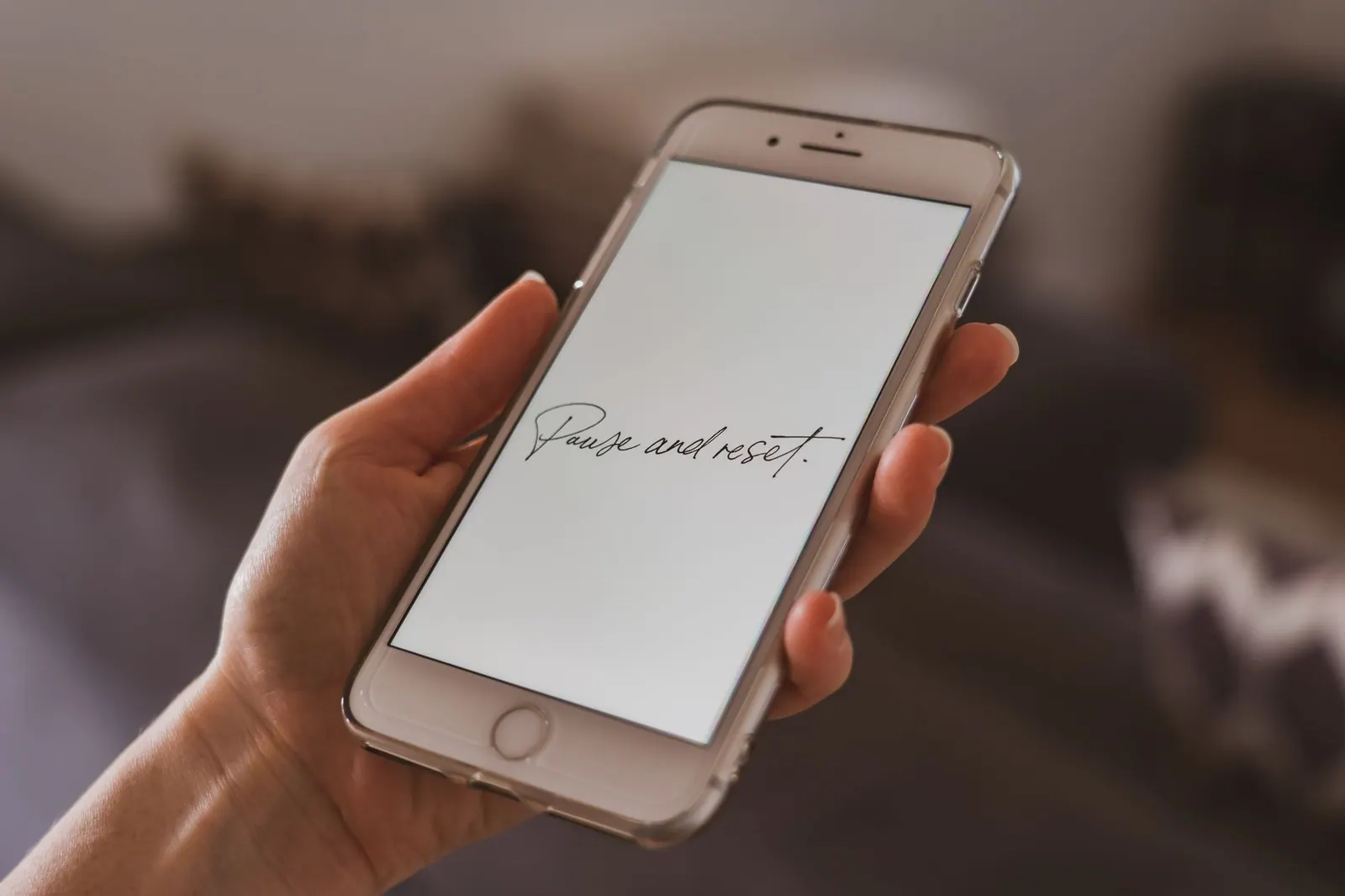
The image documents phone use but cannot show the app, purpose, duration, attention level, or effect on the person's day.
A visible device can also act as a cue while silent, so record its placement alongside incoming alerts.
3. Sort notifications by job
Create four groups:
- immediate person-to-person communication that can be urgent
- scheduled reminders you deliberately created
- useful but nonurgent service updates
- promotions, recommendations, streaks, summaries, and social signals
Keep only the first two as immediate alerts during focus periods. Deliver nonurgent items quietly or in a summary. Turn off the final group unless it supports a chosen task.
Notifications can affect a task even without a reply. A PubMed-indexed experiment on the attentional cost of cell phone notifications reported disruption on an attention-demanding task when participants received call or text alerts without directly interacting with the phone. That laboratory finding supports testing fewer alerts; it does not quantify the effect in every workplace or for every notification.
4. Add friction at entry
Remove high-cue apps from the first screen, log out after use, disable automatic sign-in, or use the web version. Keep tools you need visible. The goal is not to make the phone useless; it is to insert one moment in which purpose can return.
Create a direct route for necessary tasks. A bookmark to a specific inbox or saved document can avoid the home feed. Keeping essentials split from discovery is the feed-side version of the same move.
5. Define the session before opening
Choose one of these rules:
- task rule: reply to three messages, then close
- time rule: browse for ten minutes, then stop at the alarm
- item rule: read five saved posts, then exit
- location rule: social feeds only in one chair, not in bed
- window rule: two planned feed checks each day
An alarm works only if it triggers an action. Pair it with "close the app, lock the screen, and put the phone on the shelf." Automating the boundary works for creator alerts too: renewal off, stored cards out, alerts windowed.
6. Build a visible stopping point
Continuous feeds hide endings. Supply your own: a paper note across the charging spot, a timer, a fixed playlist, a cup of tea, or a written session card. Stop after the defined unit even if the feed offers a strong next item.
Save useful material for a later reading block rather than following every branch now.
7. Replace the function
Ask what the scroll provides at that moment.
| Function | Short replacement |
|---|---|
| Transition between tasks | Stand, stretch, refill water |
| Social contact | Send one direct message |
| News check | Read one chosen briefing |
| Anxiety relief | Slow breathing or brief walk |
| Avoiding a hard start | Work for five minutes on the smallest step |
| Entertainment | Choose one saved episode or article |
A replacement should be easy enough to use when the cue appears. For a scroll that orbits one creator, the boundary-plan case shows the same replace-and-review structure over four weeks.
8. Protect sleep separately
Set a device parking time, charge outside reach, silence nonurgent contacts, and prepare an offline alarm if needed. The CDC's sleep habits list includes turning off electronic devices at least 30 minutes before bedtime alongside consistent times and a quiet, cool room. If nighttime use is driven by insomnia, pain, shift work, caregiving, or anxiety, the scrolling rule may address only one part of the problem.
9. Review after seven days
Compare:
- unplanned openings
- uninterrupted work blocks
- bedtime and wake time
- chosen versus accidental sessions
- mood after use
- tasks completed
Keep the changes that affected the chosen outcome. Remove restrictions that created workarounds without benefit. Test a second change only after the first result is understandable.
Common questions
How long should a scrolling reset last?
Seven days can reveal cues and feasibility. Longer follow-up shows whether the change fits normal life.
Should I turn off every notification?
No. Keep alerts that serve genuine urgent or chosen functions. Silence promotional and nonurgent cues during protected periods.
Do app timers work?
They can create a pause. Their value depends on whether you follow the stopping action and whether the limit targets the real cue.
What if I override the limit?
Record why. The rule may be too vague, the replacement may be weak, or the underlying task may need attention.
Is grayscale necessary?
No. It is one optional cue change. Test whether it affects your behavior rather than assuming it will.
What if scrolling is the only thing that helps me cope?
Keep safety in view and add human or professional support suited to the underlying problem. A habit reset should not remove the only coping tool without replacement.