Features
3 Seattle platform jobs and the online-life debates behind them
Ever scroll through Seattle platform jobs and you find trust and safety roles at Amazon, Microsoft, and Reddit, plus local debates over digital boundaries.
What to take away
- When you ever scroll Seattle platform job boards, the listings cluster around three employers: Amazon, Microsoft, and Reddit.
- Trust and safety roles range from content moderation to policy analysis, with pay and working conditions that vary by employer.
- Seattle debates over digital boundaries and online life focus on transparency, worker protections, and the reach of platform rules.
- Platform policy careers often start in moderation and lead to roles shaping enforcement at scale.
- Federal data from the Bureau of Labor Statistics tracks these jobs under media, internet, and information occupations.
Three Seattle platform employers and their trust and safety roles
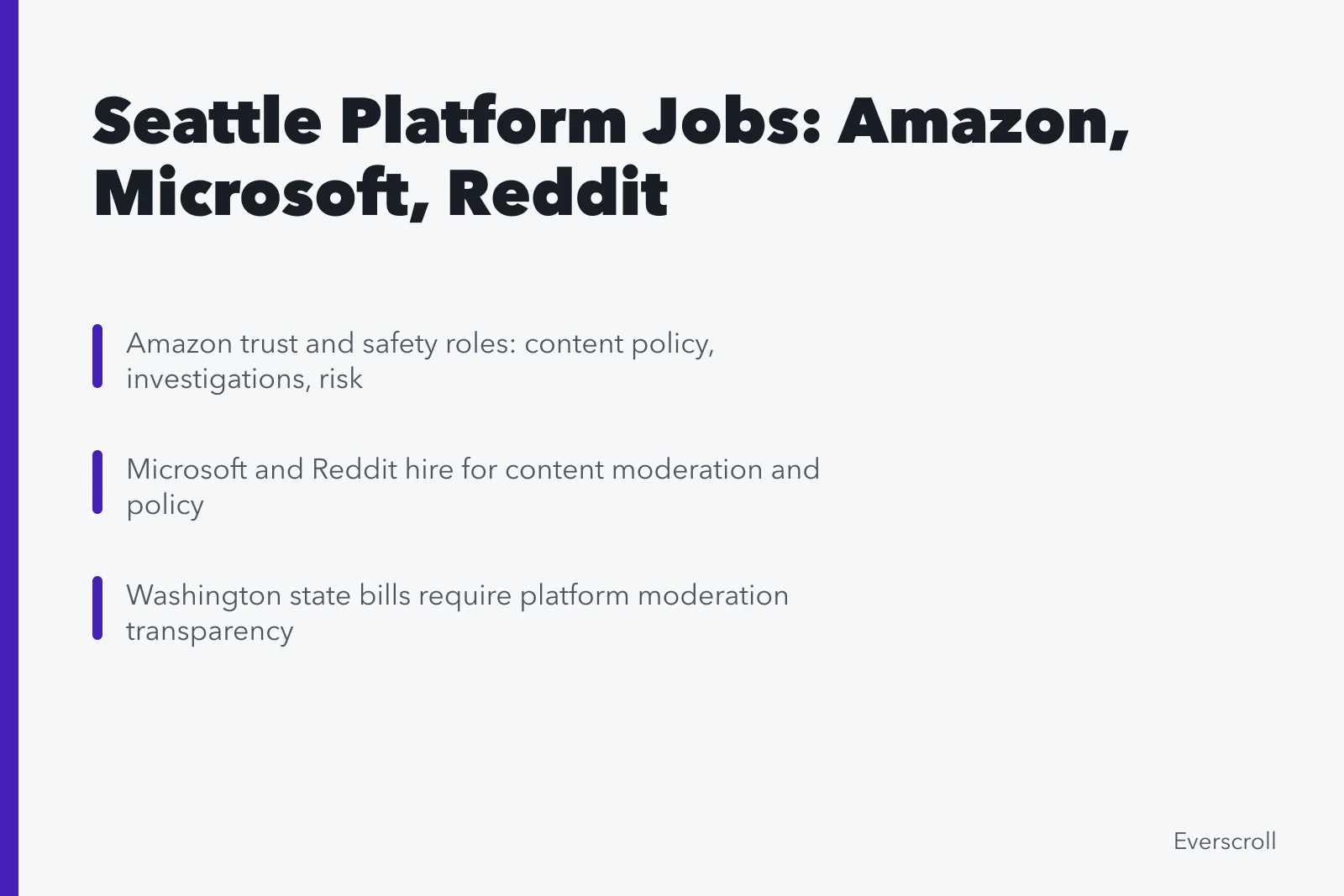
Seattle's platform economy rests on three employers with significant trust and safety operations: Amazon, Microsoft, and Reddit. Each hires for roles that police content, enforce policy, and respond to online harms.
Amazon's trust and safety teams sit within its advertising and retail divisions. Roles include content policy managers, investigations specialists, and risk analysts. These jobs focus on counterfeit goods, prohibited products, and review manipulation. Amazon also runs a customer trust unit that handles seller and buyer disputes.
Microsoft's trust and safety work spans its consumer services, including LinkedIn, Xbox, and Bing. The company hires content moderators, policy program managers, and digital safety specialists. Many roles center on child safety, violent extremism, and misinformation. Microsoft's Redmond campus and Seattle offices host these teams.
Reddit, headquartered in Seattle, has a trust and safety team that enforces its content policy. Roles include community managers, policy enforcement specialists, and safety operations analysts. Reddit also employs moderators who are volunteers, but paid staff handle escalations and policy appeals.
These employers list trust and safety roles under categories like content moderation, policy analysis, and investigations. The work is often invisible to users but central to platform operations.
The Bureau of Labor Statistics groups many of these jobs under media and internet publishing, as well as information services. Its industry statistics show employment levels and wages for these sectors.
The agency's occupation statistics break down roles like web developers, editors, and compliance officers, which overlap with trust and safety work. For a closer look at how rules are applied, see our guide to how to digital communities.
What trust and safety work involves day to day
Trust and safety work varies by role, but several core tasks recur. Moderators review flagged content, apply policy, and document decisions. Policy analysts draft and revise guidelines, often in response to new harms. Investigations specialists look into coordinated abuse, fraud, or threats. Program managers coordinate between legal, engineering, and communications teams.
A typical day for a content moderator might involve reviewing a queue of reported posts, images, or videos. They decide whether content violates policy, remove it, or escalate. They log their reasoning in internal tools. They may also participate in calibration sessions to align with peers.
Policy analysts spend more time on research and writing. They track emerging issues, consult with experts, and propose policy changes. They also train moderators and measure the impact of enforcement.
Investigations roles require digging into patterns. For example, a specialist might trace a network of fake accounts spreading disinformation. They work with engineers to identify signals and with legal teams to assess risk.
These roles demand resilience. Moderators often see disturbing content, and employers have faced criticism for inadequate mental health support. Some Seattle companies now offer counseling and limit exposure time.
The work also involves cross-functional collaboration. Trust and safety teams work with product, legal, and public policy groups. They must balance free expression, safety, and business goals.
Here is how three common trust and safety roles compare in a Seattle context:
| Role | Core tasks | Typical employer |
|---|---|---|
| Content moderator | Review flagged posts, apply policy, log decisions | Microsoft, Reddit |
| Policy analyst | Draft guidelines, train moderators, measure impact | Amazon, Microsoft |
| Investigations specialist | Trace abuse networks, work with engineers and legal | Amazon, Reddit |
For a structured way to think about these tasks, see our how to online identity and self-presentation.
Local Seattle debates over digital boundaries and online life
Seattle's tech workforce is deeply affected by debates over digital boundaries. These debates touch on work from home, always-on connectivity, and the blurring of personal and professional life.
One local debate concerns transparency in content moderation. Washington state lawmakers have considered bills requiring platforms to disclose their moderation practices. Civil liberties groups argue for user appeals and due process.
Another debate centers on worker protections for moderators. Unions and advocacy groups have called for better mental health support and limits on graphic content. Some Seattle companies have responded with new policies.
Digital boundaries also arise in the context of remote work. Seattle's tech employees often negotiate expectations around after-hours communication. The city's commuter culture and high cost of living make these boundaries a practical concern.
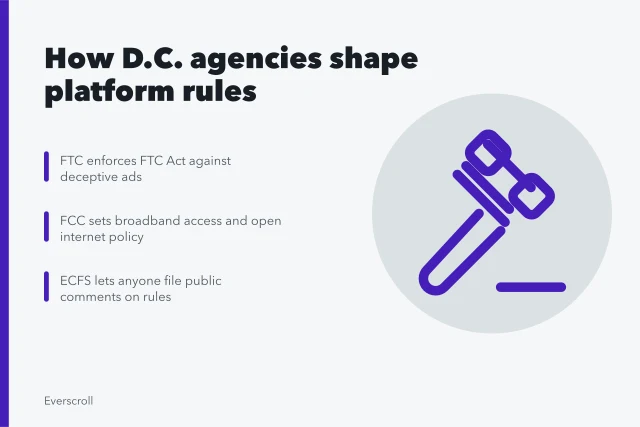
The Federal Trade Commission plays a role in advertising and marketing rules that affect platform content. Its enforcement actions shape how platforms handle disclosures and endorsements. For more on setting boundaries, see our set parasocial boundaries guide.
Pew Research Center tracks public attitudes toward online life, including concerns about harassment and misinformation. Its data informs local discussions about platform responsibility.
How platform policy jobs connect to moderation practice
Platform policy jobs translate high-level principles into enforceable rules. Policy teams draft community guidelines, define violations, and set penalties. They also train moderation teams and handle appeals.
Moderation practice, in turn, feeds back into policy. Moderators see edge cases that policymakers may not anticipate. Their feedback can lead to revised guidelines or new tools.
A policy career often begins with moderation or support work. From there, individuals may move into policy analysis, program management, or trust and safety leadership. Skills in research, writing, and cross-cultural communication are valuable.
Seattle's employers offer various paths. Amazon has policy roles in its advertising and retail trust teams. Microsoft has policy managers for its consumer services. Reddit has policy specialists focused on its communities.
The Bureau of Labor Statistics occupation data helps track these career paths. It categorizes jobs like compliance officers, editors, and computer occupations, which include policy and moderation roles. For a broader view of digital wellbeing, see our digital communities checklist guide.
The FTC's advertising and marketing guidelines also influence policy work. Platforms must ensure that ads and influencer content comply with disclosure rules.
What these roles signal about the wider creator economy
Trust and safety roles are a bellwether for the creator economy. As more people earn income online, platforms need dependable systems to manage content and commerce.
The creator economy relies on platforms for distribution, monetization, and community. Trust and safety teams protect those platforms from harmful content, fraud, and regulatory backlash.
Seattle's concentration of platform employers makes it a hub for this work. The city's workforce includes creators, moderators, and policy professionals who face the same digital boundaries.
BLS industry statistics show growth in internet publishing and broadcasting, which includes creator platforms. Occupation data shows demand for roles that blend technical and editorial skills.
Pew Research Center data indicates that many Americans encounter harassment online, which drives demand for moderation. The FTC's enforcement actions against deceptive advertising also push platforms to invest in compliance.
For creators, these roles mean clearer rules and faster responses to abuse. For workers, they represent a growing job market with unique challenges.
Common questions
What are the three Seattle platform employers mentioned? Amazon, Microsoft, and Reddit. Each has trust and safety teams handling content moderation, policy, and investigations.
What does a trust and safety role involve? Day-to-day tasks include reviewing flagged content, drafting policy, investigating abuse networks, and coordinating with legal and product teams.
What local debates affect platform work in Seattle? Debates over moderation transparency, moderator mental health, and digital boundaries in remote work. Washington state lawmakers have considered disclosure requirements.
How do platform policy jobs relate to moderation? Policy teams set rules that moderators enforce. Moderators provide feedback that shapes policy revisions.
Where can I find data on these jobs? The Bureau of Labor Statistics publishes industry and occupation statistics. Pew Research Center provides data on online life.