Guides
Opting Out of People-Search Sites: A US Guide Without a Lawyer
Opting out of people-search sites means deciding between DIY removal and a paid service. Key checks: covered-site list, sample removal report, and contract terms.
What to take away
- Opting out of people-search sites means submitting removal requests to sites like Whitepages and Spokeo yourself or paying a service to do it.
- No single US law creates one opt-out form for all data brokers, so you will still make choices about which sites to cover.
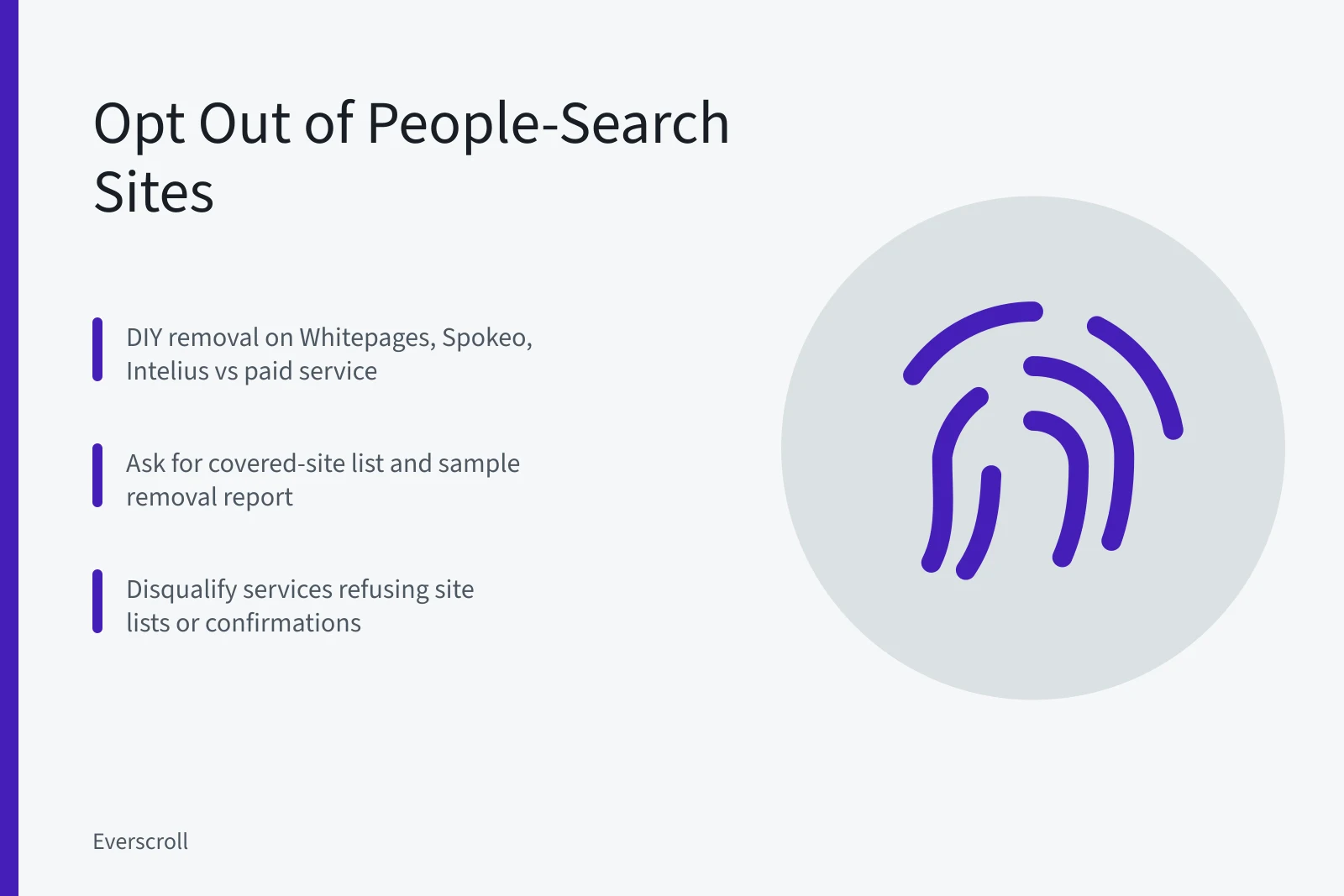
- Ask removal services for a written list of covered sites and a sample removal report before you pay.
- Disqualify any service that refuses to name its covered sites, cannot show a recent removal confirmation, or charges before you see a sample.
- Never pay a service that will not show you a redacted sample of its work.
Scopes that are actually different jobs
Opting out without a lawyer splits into two different jobs. Filing requests yourself on Whitepages, Spokeo, Intelius, and other people-search sites is one job. Paying a removal service to send those requests and check for reappearances is another job. The two scopes are not interchangeable. A one-time removal is not the same as ongoing monitoring. A service that removes from 50 sites is not covering the hundreds of smaller brokers that resell data. The Federal Trade Commission explains basic removal steps in its online privacy guide.
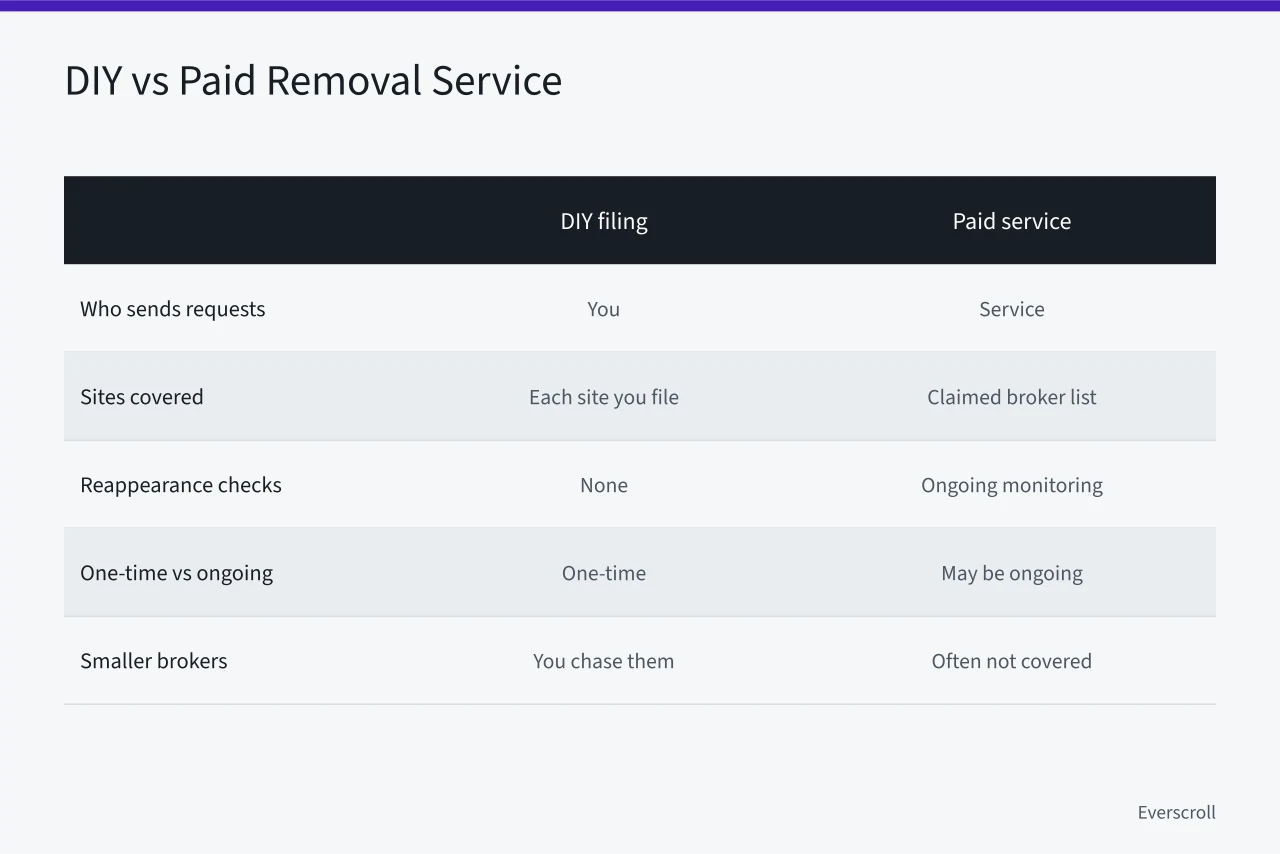
You will not receive one federal list. Instead, you choose between handling each site yourself or delegating the chase to a service that claims to cover many brokers.
Data brokers collect and sell personal details, and many offer opt-out mechanisms. However, opt-out pages vary. Some sites ask for an email verification. Others require a copy of a photo ID. State laws add specific rights, especially under California privacy rules, where residents can demand deletion from data brokers. If you want to file requests yourself, see our separate Delete Your Digital Footprint checklist.
| Scope | What it covers | What it does not cover |
|---|---|---|
| One-time DIY removal | Submitting your own requests to Whitepages, Spokeo, and similar sites | Re-checking months later or removing new profiles |
| Paid removal service | Sending requests on your behalf and often rechecking periodically | Guaranteeing that no future broker will ever repost your data |
| Legal help | Advising on state-specific rights or suing a broker | Handling day-to-day removal forms without a lawyer |
Questions to ask before you sign up
- "Which sites do you actually cover, and can you give me the current list?"
- "How often do you re-check, and what happens if my profile reappears?"
- "Will you send me a confirmation email for each removal request?"
- "Do you handle Whitepages and Spokeo directly, or do you only cover smaller brokers?"
- "What personal data do I have to upload to you, and how is it stored?"
Evidence to request from any opt-out service
Ask for a sample removal report. A real service can show a redacted screenshot or a confirmation email from a people-search site. It should list the URL of the profile removed and the date. If the service says it cannot share any sample because of confidentiality, treat that as a red flag. Removal services that work with Whitepages and Spokeo should have a standard report format. The FTC's identity theft topic page also describes removing personal information from people-search sites.
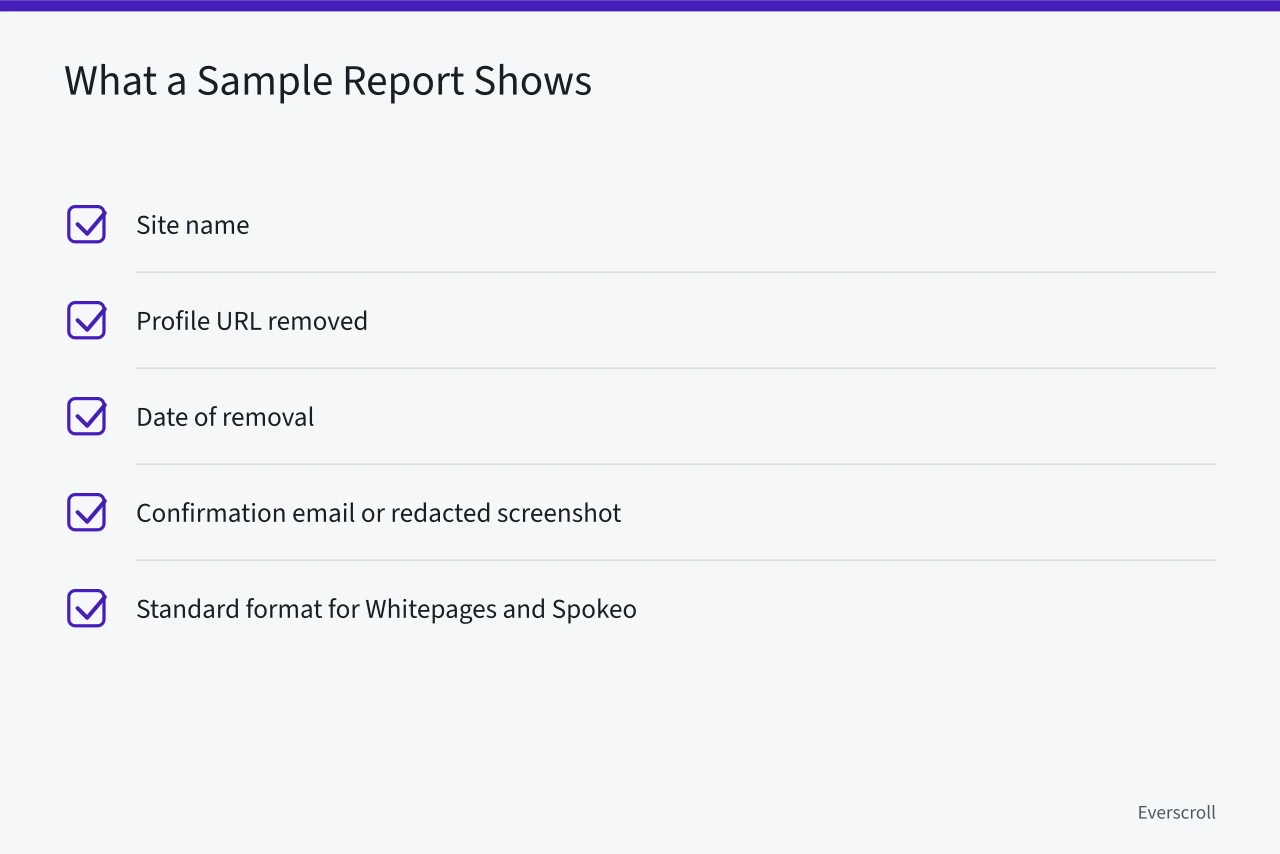
A sample report might show the site name, the date, and a note that the profile was removed. Ask for one from Whitepages or Spokeo if the service claims to cover them.
Some opt-out pages use misleading buttons to keep you subscribed. For background on how these dark patterns work, see the FTC Click-to-Cancel Rule.
Answers that should end the conversation
- "We cover all sites, but we cannot give you a list." Disqualify. A service that will not name its covered sites cannot be verified.
- "We do not provide removal confirmations." Disqualify. Without proof, you cannot tell if the request went through.
- "We charge an annual fee before you see a sample report." Disqualify. You should not pay for work you cannot verify.
- "We never share reports because that would violate our clients' privacy." Disqualify. A redacted sample does not expose personal data.
What the agreement must say
The contract must state which sites are covered at the start, which sites are excluded, and how often the service will re-check. It must say whether the fee covers one removal pass or ongoing monitoring. It must state what happens if your profile reappears after the service claims removal. It must name the party responsible for submitting requests, not just a third-party vendor it may use. If the service uses subcontractors, the contract must name them or state that the named service is accountable.
It must include a simple cancellation method and a refund policy if removal confirmations are not produced. For a broader look at how profile settings affect your exposure, read the comparison of Private vs Public Social Profiles.
Common questions
Can I opt out of all people-search sites at once? No. There is no federal one-click opt-out. Some state laws, such as California's, add rights, but you still need to go site by site or use a service that does.
Do I need a lawyer to use a removal service? No. The process is administrative, not legal, as long as you are not claiming a violation that might lead to a lawsuit.
Will a paid service permanently remove my data? No service should promise permanent removal. Brokers can regain data from public records or new sources. The contract should say what happens on reappearance.
How do I know a service is not a scam? Ask for a sample removal report, check its covered-site list, and avoid any service that refuses to produce confirmation emails.